

The National Highway project
National Highway
Project
National Highway project: M25 J8
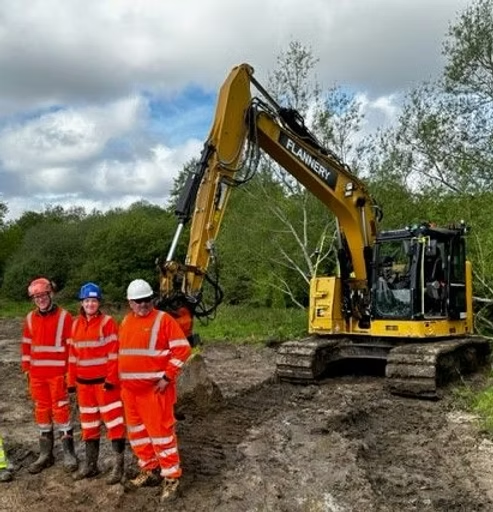
The National Highway project on M25 J8 with a high priority on delivering the projects objectives on time. Extensive improvement works to ease congestion were being undertaken and as part of the scheme tree removal works were required.Enims and EH Tree Care were able to jointly over come vast ecological restraints with a proactive outlook and with positive collaboration between Enims and EH Treecare, the team were able to deliver to the highest standard and on time.
Full site walkovers were carried out by enims ecologists, the purpose of which was to identify any signs or evidence of species or habitats which are protected and would pose an ecological constraint to the proposed work on the Brentwood site or indeed, future planned work on the site which is particularly important in planning for the next stages of the project to save time and client expenses.
The site is a parcel of woodland that offers a variety of mature tree species such as oak, ash, white poplar and field maple. Enims ecologists performed ground assessments of the trees on site and assigned potential for roosting bats to the trees likely impacted by the proposed development.
The site walkover also confirmed that a Badger sett was active on the site and likely to be impacted by the works along with other mammal holes.
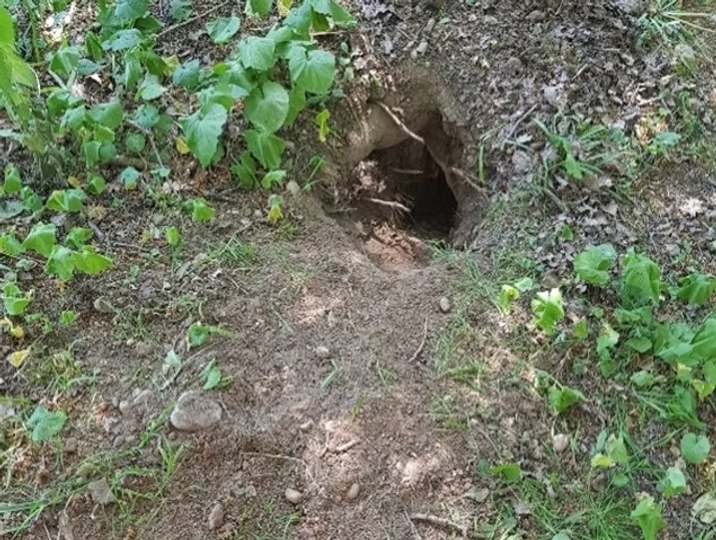
throughout the life of the project a broad variety of ecological constraints were identified and action taken. Fish breeding season and nesting bird season were particularly important on this site. Trout were found during earlier badger surveys in the brook connecting to the stream.
Additional surveys of the trees using a MEWP to scope out potential roosting features for bats were needed along with a further check immediately prior to tree felling to check for both bats and nesting birds. The mammal holes and Badger sett were surveyed and monitored and appropriate mitigation was issued for works to be able to continue safely with no impact to the mammals identified through the monitoring process.
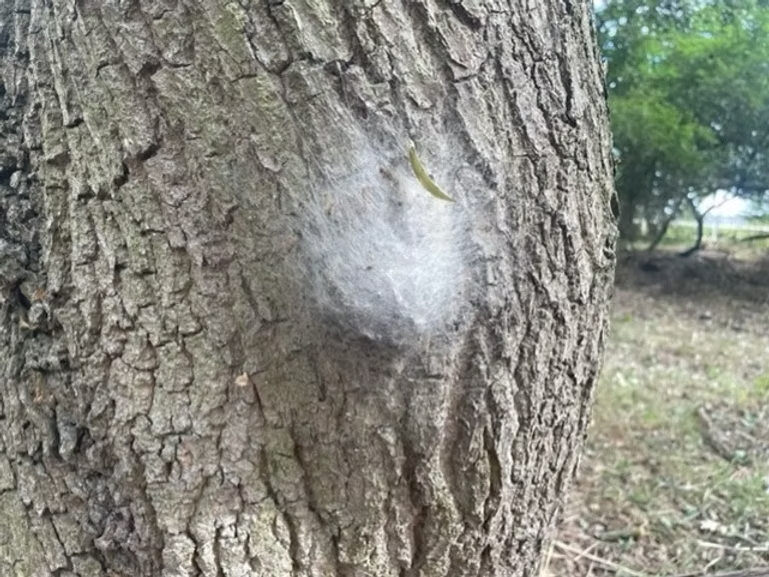
Whilst surveying the trees, Oak processionary moth (Thaumetopoea processionea) nests were found on site. This species of moth has hairs that can cause lung infections and skin irritation. This information was cascaded to all members onsite and via the office staff at enims and EH Treecare. This enabled enims to uphold our exemplary Health and Safety standards by ensuring that all workers wore a mask when working on or near the marked trees which housed the moths’ nests