
Welcome to Enims
Your trusted partner in environmental and ecological consultancy.
dedicated to minimising environmental impacts
We help our clients make informed decisions that protect and strengthen the natural environment, support sustainable development and create lasting value for people, places and the planet.
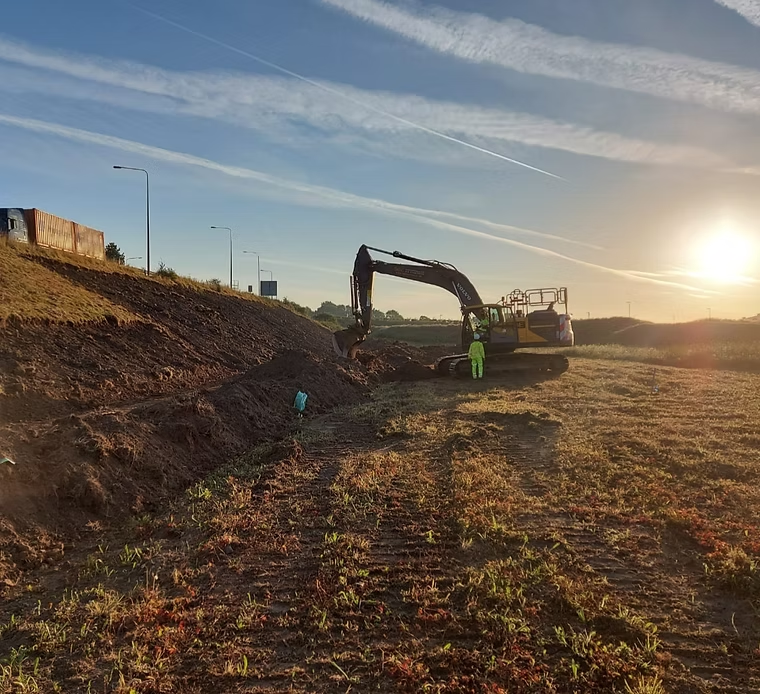
From initial advice through to project delivery, we provide practical ecological solutions that help clients navigate environmental requirements with confidence. Our services include species surveys, licensing, mitigation, BNG, HMMPs, CEMPs, Ecological Clerk of Works support and environmental audits, all designed to keep projects moving while delivering measurable benefits for nature.
Ecology Support

Preliminary Ecological Appraisal
A Preliminary Ecological Appraisal (PEA) is often required to identify ecological constraints and ensure environmental considerations are addressed early in the planning process.
FIND OUT MORE
A Preliminary Ecological Appraisal (PEA) is typically undertaken during the early stages of a development project and is often required to support planning applications and site assessments.
During the survey, an ecologist assesses the habitats and features present on site, looking for evidence of protected species and identifying any ecological constraints that may influence the proposed development.
The appraisal evaluates the ecological value of the site, considers the potential impacts of development, and identifies whether further surveys may be required for protected species or priority habitats.
Where additional survey work is recommended, this may include species-specific surveys, habitat assessments or mitigation measures to support the planning process and ensure compliance with environmental legislation.
Undertaking a PEA at an early stage helps identify potential constraints, reduce planning risks and ensure ecological considerations are incorporated into project design from the outset.

Preliminary Roost Assessment
A Preliminary Roost Assessment (PRA) is often required to identify whether bats could be present and to highlight any ecological constraints early in the planning process.
FIND OUT MORE
A Preliminary Roost Assessment (PRA) is typically undertaken during the planning stage of a development and may be required by the Local Planning Authority or to support compliance before works commence.
During the survey, an ecologist inspects buildings, bridges, trees or other structures for evidence of bats and features that could provide suitable roosting opportunities. This may include searching for bat droppings, staining, feeding remains, access points and other indicators of bat activity.
The survey also assesses the suitability of the structure to support roosting bats and categorises its potential as negligible, low, moderate or high.
Where evidence of bats is found, or where suitable roosting features are present, further surveys may be recommended. These can include dusk emergence surveys, or other species-specific investigations to determine whether bats are present and to inform any mitigation requirements.
Undertaking a PRA early in the project helps identify potential constraints, avoid delays during the planning process and ensure compliance with wildlife legislation.

Bat Survey
Bat surveys are often required to determine whether bats are present and to identify any ecological constraints that could affect development proposals.
FIND OUT MORE
Bat emergence surveys are typically recommended following a Preliminary Roost Assessment (PRA) where a building, tree or structure has been identified as having the potential to support roosting bats.
These surveys are undertaken by a team of ecologists during the active bat season (May – September) and involve observing the structure at dusk to record any bats emerging from roosting locations. Depending on the level of suitability identified during the PRA, multiple survey visits may be required to provide sufficient evidence of bat presence or likely absence.
Surveyors use specialist bat detectors and specialist camera equipment to identify bat activity, species where possible, and the locations used by bats to access or leave the structure.
The findings help determine whether a roost is present, the type of roost being used, and the importance of the site for bats. This information is then used to assess the potential impact of the proposed works and identify any mitigation, compensation or licensing requirements.
Undertaking emergence surveys at an early stage helps ensure projects progress efficiently, reducing the risk of delays during the planning process and supporting compliance with wildlife legislation.

Great Crested Newt Survey
A Great Crested Newt Survey identifies the presence of this protected species, informing planning decisions and ensuring appropriate mitigation and licensing measures are considered.
FIND OUT MORE
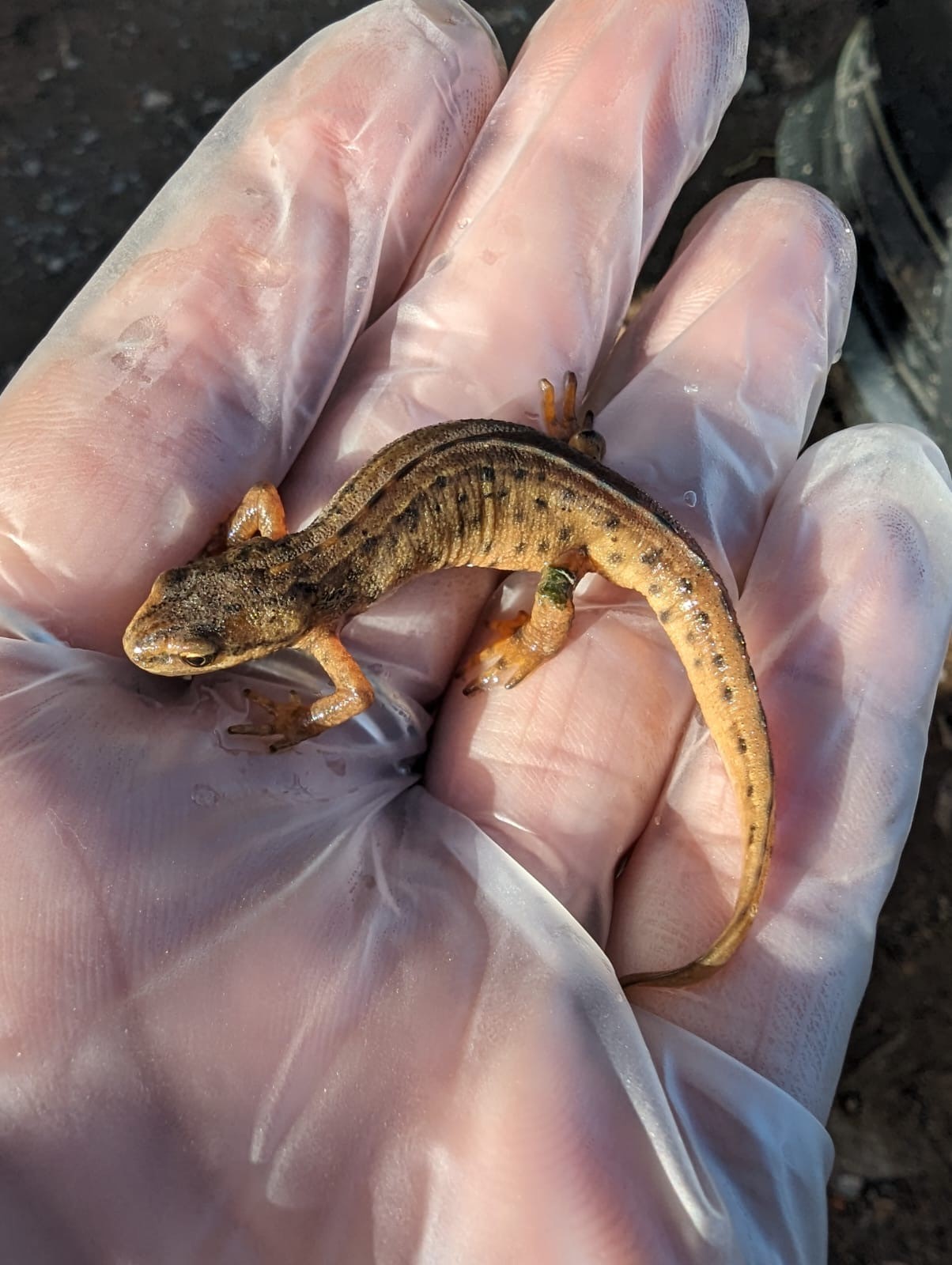
Great Crested Newts (GCN) are a legally protected species and are a material consideration within the planning process. Where suitable breeding ponds or terrestrial habitats are present within or adjacent to a development site, surveys may be required to determine whether Great Crested Newts are likely to be affected by the proposed works.
The survey process typically begins with a habitat assessment to identify waterbodies and surrounding habitats that may support Great Crested Newts. Depending on the findings, presence/absence surveys may be undertaken during the optimal survey season, typically between March and June. Survey methods can include torchlight surveys, bottle trapping, egg searches and environmental DNA (eDNA) testing.
Where Great Crested Newts are confirmed to be present, our ecologists will advise on the most appropriate mitigation strategy to avoid or minimise impacts. This may include habitat protection measures, sensitive working practices, habitat enhancement, or the preparation of licence applications where required.
By identifying constraints early, Great Crested Newt surveys help ensure compliance with wildlife legislation, reduce planning risk and support the successful delivery of development projects.

Reptile Survey
Reptile Surveys provide valuable insight into species use of a site, enabling potential impacts to be considered early within project design.
FIND OUT MORE
Reptile species found in the UK are protected by law and can be present within a range of habitats, including grassland, scrub, woodland edges, heathland, brownfield land and field margins. Where suitable habitat is present within or adjacent to a proposed development site, a reptile survey may be required to determine whether reptiles are present and assess how they may be affected by the proposed works.
Reptile surveys are typically undertaken using a series of artificial refugia, strategically placed across suitable habitat. These refugia are left in situ to allow reptiles to use them for shelter and basking before being checked by an ecologist during favourable weather conditions.
The optimal survey season generally extends from April to June and September, when reptiles are most active. Surveys are usually avoided during periods of extreme heat, cold, prolonged rainfall or high winds, as these conditions can reduce survey effectiveness. Depending on the objectives of the project, a minimum of seven survey visits is typically required to establish likely presence.

Dormouse Survey
A Dormouse Survey assesses the presence of this protected species within suitable habitats, helping inform development proposals and identify any mitigation requirements.
FIND OUT MORE
Dormice are a European Protected Species, and both the animals and their habitats are protected under UK wildlife legislation. It is an offence to deliberately capture, injure or kill dormice, or to damage, destroy or obstruct access to their breeding sites and resting places.
Dormice are commonly associated with species-rich hedgerows, but they can also be found within woodland, scrub, coppice habitats and well-connected vegetation corridors. As they spend much of their time above ground within dense vegetation, they can often go undetected without specialist survey techniques.
Where suitable habitat is present on or adjacent to a proposed development site, a dormouse survey may be required to determine whether the species is present and assess any potential impacts from the proposed works. Survey findings help inform project design, mitigation requirements and, where necessary, support protected species licence applications.
Dormouse surveys are typically undertaken using nest tubes and/or nest boxes installed within suitable habitat. These are checked by licensed ecologists throughout the survey season in accordance with recognised best-practice guidance. Surveys are generally undertaken between April and November, with surveys usually requiring a minimum of six monthly checks between May and November to determine presence or likely absence.
Where dormice are identified, our ecologists can advise on appropriate mitigation measures, habitat management, method statements and licensing requirements to ensure legal compliance and support the successful delivery of your project.

Water Vole and Otter Surveys
A Water Vole and Otter Survey assesses the presence of these protected species within watercourses, helping identify ecological constraints and development requirements.
FIND OUT MORE
Water Voles and Otters are legally protected under UK legislation, making it an offence to deliberately capture, injure or kill them, or to damage, destroy or obstruct access to their resting places and habitats.
As both species are closely associated with aquatic environments, any proposed works affecting rivers, streams, ditches, ponds, lakes or wetlands should consider the potential presence of Water Voles and Otters at an early stage of project planning. Surveys help establish whether either species is present, assess habitat suitability and identify any constraints that may influence the design or implementation of a development.
Water Voles are identified primarily through field signs rather than direct observation. Surveys focus on locating evidence such as:
Burrows
Feeding stations
Characteristic droppings
Latrines
Footprints
Well-used runways through vegetation
The optimal survey season typically runs from April to September, when field signs are most visible and Water Vole activity is at its highest. In many cases, one detailed survey visit is sufficient to determine presence or likely absence, although additional visits may be recommended where results are inconclusive or to support licence applications.
Otter surveys involve searching suitable habitat for evidence of activity, including:
Spraints (droppings)
Footprints and tracks
Slides
Feeding remains
Holts
Couch sites and resting places
Unlike many protected species surveys, Otter surveys can generally be undertaken throughout the year, although survey effectiveness may be reduced during periods of flooding or high-water levels. Typically, a single walkover survey of suitable habitat is sufficient to assess presence and identify important resting places.

Bird Survey
A Bird Survey provides an understanding of bird activity across a site, helping guide development proposals and protect important ecological features.
FIND OUT MORE
Bird surveys are undertaken to establish which bird species are using a site and the surrounding area. As all wild birds, their nests and eggs are protected under UK legislation, surveys play an important role in ensuring development proposals consider potential impacts on breeding, wintering and notable bird populations.
Birds utilise a wide variety of habitats, including woodland, scrub, grassland, farmland, wetlands, waterbodies and urban environments. The type of survey required will depend on the habitats present and the nature of the proposed development.
Breeding Bird Surveys
Breeding bird surveys are undertaken during the nesting season, typically between March and July, to identify territories, nesting locations and species diversity across a site. Multiple survey visits are usually required to accurately establish breeding activity, with four to six visits commonly undertaken depending on the site and project requirements.
Wintering Bird Surveys
Where suitable habitat is present for wintering birds, surveys may be required between November and February. These surveys assess how birds use a site for feeding, roosting and sheltering during the winter months and are often necessary for larger developments or sites located near designated habitats.
Nesting Bird Checks
Where vegetation clearance or construction works are proposed during the bird nesting season, a nesting bird check may be required immediately prior to works commencing. This helps ensure active nests are identified and protected in accordance with wildlife legislation.

Badger Surveys
FIND OUT MORE
Badgers are protected under the Protection of Badgers Act 1992, making it an offence to damage, destroy or obstruct access to a badger sett, or to disturb badgers whilst occupying a sett. As a result, development and land management activities must carefully consider the potential presence of badgers and their habitats.
Badgers can be found in a wide range of habitats, including woodland, hedgerows, farmland, grassland and areas of scrub. Where suitable habitat is present on or adjacent to a site, a badger survey may be required to determine whether badgers are present and assess how they may be affected by proposed works.
Badger surveys typically comprise a detailed walkover of the site and surrounding land to identify evidence of badger activity.
Badger surveys can generally be carried out throughout the year, although evidence is often most visible during autumn, winter and early spring when vegetation cover is reduced.
Where licence applications are required, additional surveys or monitoring may be recommended to support mitigation proposals and obtain up-to-date activity information.
emins CASE STUDIES

Home Owners – Getting started
We don’t just work on big developments — we’re here for smaller projects too. If you’re a homeowner planning an extension or a small build, we can help you understand any ecological requirements and make sure your project runs smoothly.
Our team can check for protected species, advise on simple steps to look after local wildlife, and suggest easy ways to add biodiversity back into your space. We also help you meet the expectations of your Local Planning Authority, making sure ecological considerations are addressed properly so your application isn’t delayed.
It’s about keeping things practical, straightforward, and supportive — so you can get on with your plans while knowing you’re doing the right thing for nature and for compliance.

Enims partners with architects and planners to provide ecological and environmental expertise for small and medium‑sized developments. Whether you’re designing housing schemes, extensions, or community projects, we help you navigate ecological requirements with clarity and confidence.
Our team delivers surveys, assessments and practical solutions that ensure compliance with planning regulations and Local Planning Authority expectations. From protected species surveys to biodiversity enhancements, we provide the information and guidance needed to keep projects moving smoothly while safeguarding the environment.
We also support those working directly with householders and private clients, offering straightforward advice that makes ecological compliance accessible and achievable. With over 20 years of experience, Enims is the trusted choice for professionals who want reliable ecological input without unnecessary complexity.
Interested in a career with us?
