
The National Highway project

The National Highway project

National Highway

Lorem ipsum dolor sit amet, consectetur adipiscing elit.

Project

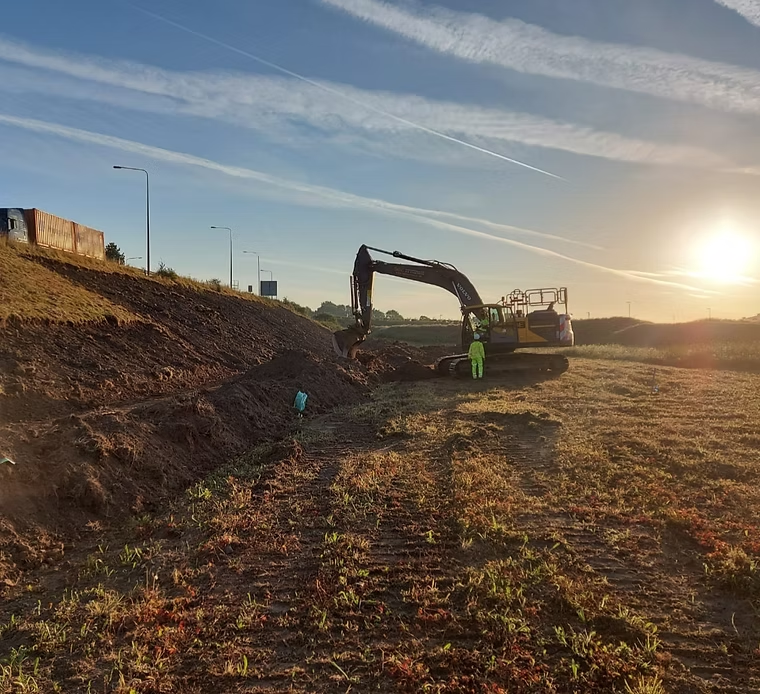
National Highway project: M25 J8

The National Highway project on M25 J8 with a high priority on delivering the projects objectives on time. Extensive improvement works to ease congestion were being undertaken and as part of the scheme tree removal works were required.Enims and EH Tree Care were able to jointly over come vast ecological restraints with a proactive outlook and with positive collaboration between Enims and EH Treecare, the team were able to deliver to the highest standard and on time.

Full site walkovers were carried out by enims ecologists, the purpose of which was to identify any signs or evidence of species or habitats which are protected and would pose an ecological constraint to the proposed work on the Brentwood site or indeed, future planned work on the site which is particularly important in planning for the next stages of the project to save time and client expenses.

The site is a parcel of woodland that offers a variety of mature tree species such as oak, ash, white poplar and field maple. Enims ecologists performed ground assessments of the trees on site and assigned potential for roosting bats to the trees likely impacted by the proposed development.

The site walkover also confirmed that a Badger sett was active on the site and likely to be impacted by the works along with other mammal holes.
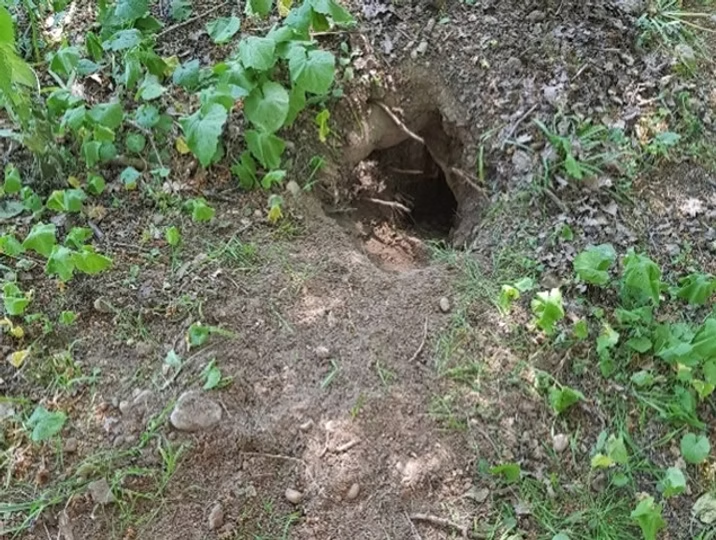
throughout the life of the project a broad variety of ecological constraints were identified and action taken. Fish breeding season and nesting bird season were particularly important on this site. Trout were found during earlier badger surveys in the brook connecting to the stream.
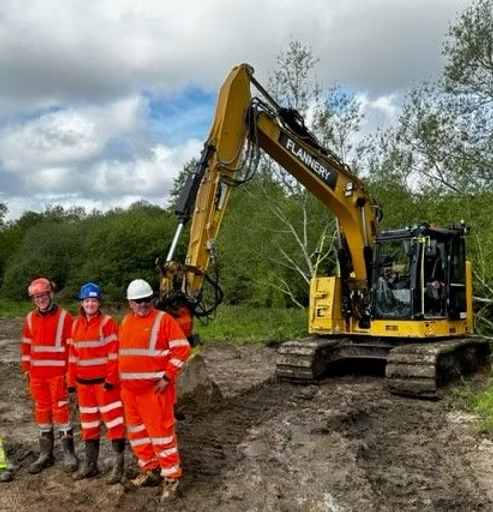
Additional surveys of the trees using a MEWP to scope out potential roosting features for bats were needed along with a further check immediately prior to tree felling to check for both bats and nesting birds. The mammal holes and Badger sett were surveyed and monitored and appropriate mitigation was issued for works to be able to continue safely with no impact to the mammals identified through the monitoring process.

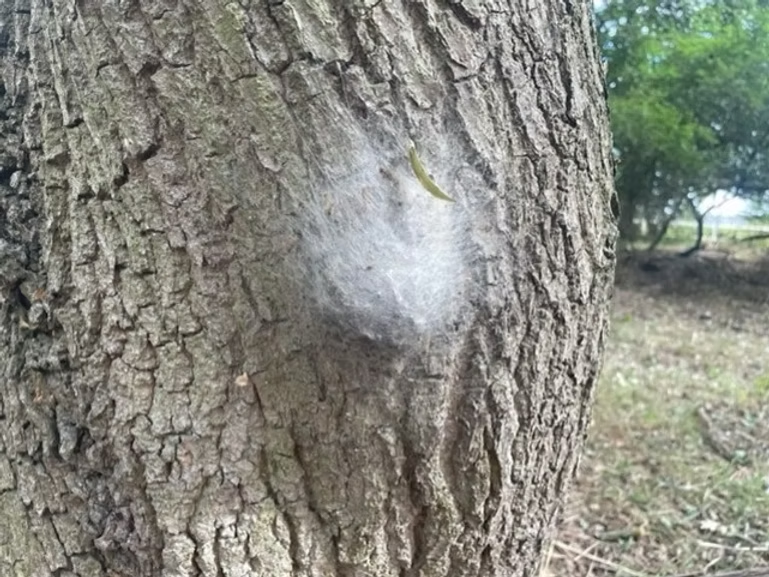
Whilst surveying the trees, Oak processionary moth (Thaumetopoea processionea) nests were found on site. This species of moth has hairs that can cause lung infections and skin irritation. This information was cascaded to all members onsite and via the office staff at enims and EH Treecare. This enabled enims to uphold our exemplary Health and Safety standards by ensuring that all workers wore a mask when working on or near the marked trees which housed the moths’ nests
Woodhouse Lane

Woodhouse Lane

Woodhouse Lane

Lorem ipsum dolor sit amet, consectetur adipiscing elit.

Featured Project

Design Agency:
Website Information Architecture

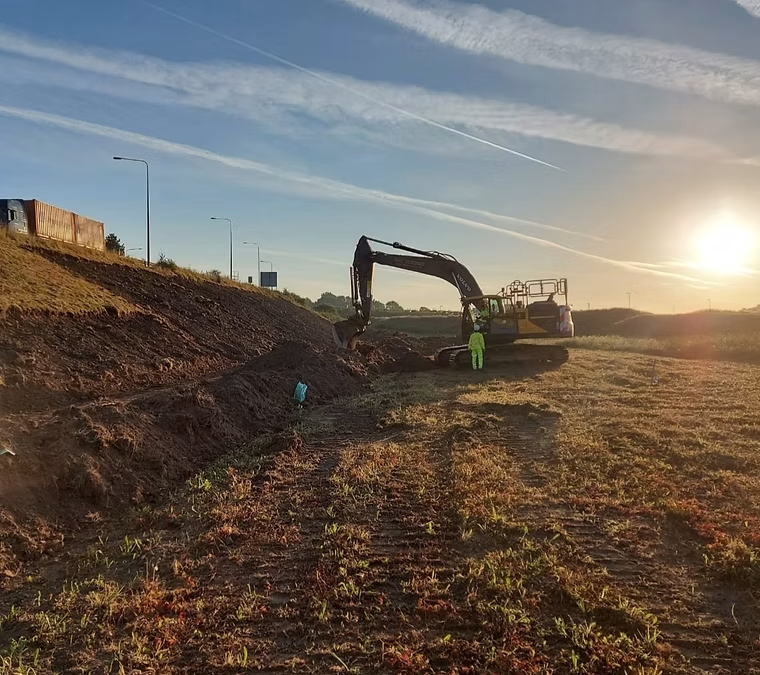
The area West of Woodhouse Lane in Botley is undergoing transformational works to include an upgrade to surrounding infrastructure to support a large housing development which will be developed in the future. VolkerFitzpatrick appointed enims as their designated ecological consultant to deliver ecological support throughout the whole life of the project. VolkerFitzpatrick needed a site local, reactive ecological company to assist them in the delivery of their project with a mindful but proactive approach to a range of ecological challenges, which included a variety of species surveys such as invasive species, badgers, amphibians and nesting birds in the works area.

VolkerFitzpatrick were keen to approach the project with the environment at the top of their priorities and employed enims to work alongside them because enims approached the project with the aim of working collaboratively with VolkerFitzpatrick whilst giving them and their contractors the support and knowledge which enabled a relationship to grow and a culture within all the teams onsite to value, recognise and protect the ecology on site.

Throughout the life of the project a broad variety of ecological constraints were identified and action taken. Fish breeding season and nesting bird season were particularly important on this site. Trout were found during earlier badger surveys in the brook connecting to the stream.

There were several ecological constraints that were found during the works that were not foreseen such as the discovery of Field voles (Microtus agrestis) and Hemlock water dropwort (Oenanthe crocata) however, these were all dealt with quickly and effectively to make sure the work could continue without negatively effecting the environment or the progress of the works.

throughout the life of the project a broad variety of ecological constraints were identified and action taken. Fish breeding season and nesting bird season were particularly important on this site. Trout were found during earlier badger surveys in the brook connecting to the stream.

Himalayan Balsam was found on the site and the surrounding areas, it was anticipated that this could be an area where enims and VolkerFitzpatrick could effectively work together and bring added benefit to the area being developed. A weekly walkover survey which also monitored badger activity and site wide ecological constraints soon became encompassed with checking for new Himalayan Balsam growth. As Himalayan balsam is extremely vigorous and out competes natural native plants which in turn effects the bees pollination of native plants and overall bio diversity of the area this was identified by enims to be of high priority in leaving the site in a better condition than before the works. A process was soon enabled by effective communication between enims and VolkerFitzpatrick whereby ecologists would begin the effective removal at the appropriate times.

Once the vegetation within and around the swale has grown, which will be a mixture of grass and wildflowers, it will trap organic and mineral particles which are then integrated into the soil, with the vegetation absorbing the nutrients. 

The quality of the water in the new river has improved and become very clear, which means that it is suitable for fish. As species of fish move through the river, they will be able to use the backwaters as resting places.

During the works, different amphibians were found around the previously existing stream, since species like common frogs tend to be found in areas of meadow or woodland around water sources, once the vegetation has started to grow this will become a valuable habitat for them. The ecologist went back around two weeks after this phase was completed and found a large number of tadpoles within the backwaters, meaning that the new river is already supporting the ecosystem, especially due to the algae that has begun to grow within the water, which provides a food source for the young tadpoles.